Negotiating for Financial Success (Coursera): Negotiation Prep, Not Just Money Tips

If you’ve ever tried to negotiate a rent agreement, buy a car, or discuss a salary increase, you know that understanding the numbers is only half the battle. Many people in Johannesburg, Nairobi, or Lagos can budget and save, but struggle to get the best deal when it matters most. That’s where negotiation skills make a real difference.
This article explains exactly what you’ll learn in Coursera’s “Community Awareness: Negotiating for Financial Success” course, who will benefit most, and what it doesn’t offer. You’ll get a clear verdict on whether it’s worth your time—especially since it’s free to study but does not issue any certificate.
Who Gains Most from This Course? The Bottom Line
Best for: Anyone new to negotiation who wants practical tools for personal finance decisions—like buying, renting, or job offers—without paying for a certificate.
Not for: Those who need formal proof of completion, advanced negotiation tactics, or a deep dive into finance topics like investing or debt management.
Bottom line: This course is a strong introduction to negotiation strategy for everyday financial situations, but offers no certificate and is best used as a practical learning resource.
What You Actually Learn: Module Breakdown
This course is structured around six short modules, mixing 23 videos and 3 readings. The focus is on negotiation as a financial skill, not just theory. Here’s what each part covers:
- Module 1: Welcome to Negotiating for Financial Success!
- Introduction to financial literacy and negotiation skills
- Meet the instructor
- Module 2: Core Concepts
- When (and why) you should negotiate
- Position-based vs. interest-based negotiation
- Six types of dispute resolution
- Three perspectives for resolving disputes
- Module 3: Prepare: Plan Your Negotiation Strategy
- Key questions for negotiation analysis
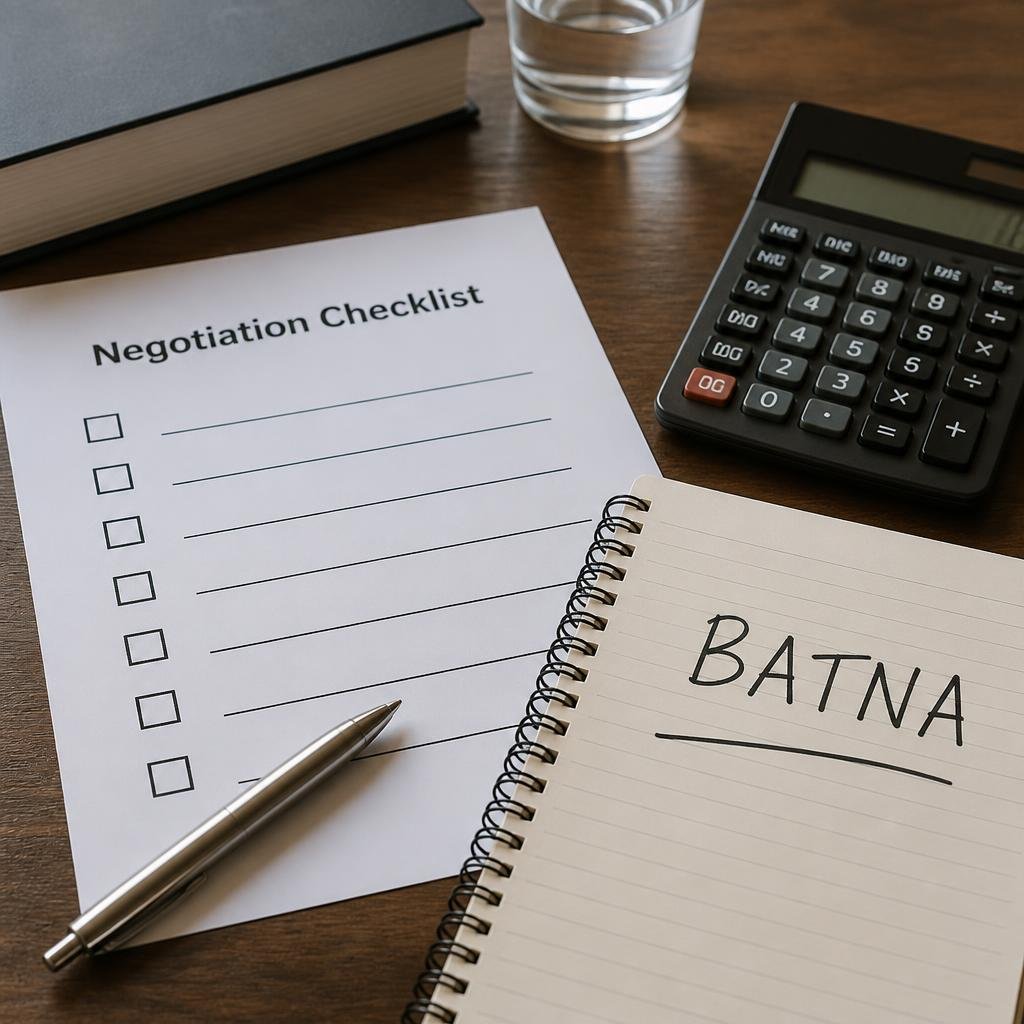
- Setting your reservation price, target, stretch goal, and BATNA (Best Alternative to a Negotiated Agreement)
- Mapping BATNA & ZOPA (Zone of Possible Agreement)
- Using decision trees for negotiation planning
- Module 4: Cross-Cultural Negotiations
- Challenges in cross-cultural negotiation
- When to adapt your style and when not to
- The value of role reversal
- Module 5: Ethical Issues
- The line between bluffing and fraud
- Fiduciary duty and fairness
- General ethical standards in negotiation
- Module 6: Using Agents
- When to use a negotiation agent
- Assessing the authority of your counterpart
Key Negotiation Tools and When to Use Them
Negotiation is more than just asking for a better deal—it’s about preparation and understanding your own goals and limits. The course teaches several core concepts:
- Reservation Price: The lowest (or highest) point you’re willing to accept.
- Target: Your ideal outcome.
- Stretch Goal: The best-case scenario you can realistically aim for.
- BATNA: Your backup plan if the negotiation fails.
- ZOPA: The range where both sides can agree.
For example, imagine a small business owner in Cape Town negotiating with a supplier. Before the meeting, she sets her reservation price (the maximum she’ll pay), her target price, and her stretch goal. She also identifies her BATNA—another supplier who offers a slightly higher price but better payment terms. By preparing these numbers, she enters the negotiation with clarity and confidence, ready to walk away if the deal doesn’t meet her minimum.
The course also highlights how cultural differences and ethical considerations can shape negotiation outcomes, helping you avoid common pitfalls.
Strengths and Weaknesses: What Stands Out
Strengths:
- Focuses on practical negotiation prep, not just financial theory.
- Short, clear modules—easy to fit into a busy schedule.
- Teaches essential concepts like BATNA, ZOPA, and decision trees.
- Covers ethical and cross-cultural issues often missed in basic finance courses.
- Entirely free to access; no payment or card needed.
Weaknesses:
- No certificate or proof of completion—cannot be used for job applications or formal recognition.
- Does not cover advanced negotiation tactics or in-depth financial planning.
- Some examples are US-focused, though the concepts apply globally.
- Not interactive: no live practice or peer negotiation exercises.
When This Course Isn’t Enough and Where to Go Next

This course is not the right fit if you need a certificate for your CV, are seeking advanced negotiation strategies, or want a deep dive into investing, credit, or debt management. It’s also not meant for those looking for highly interactive or peer-based learning.
Next steps:
- If you want to continue, Coursera offers the full “Successful Negotiation: Essential Strategies and Skills” programme, which expands on these basics (note: the full programme may require payment for a certificate).
- For more interactive practice, look for free negotiation workshops or community groups in your area.
- If you need proof of learning, consider other free courses that issue certificates, but always check the requirements and recognition with employers or institutions in your country.
Access, Cost, and How to Start
| Detail | What You Need to Know |
|---|---|
| Cost | Free to study; no payment or card required. |
| Certificate | No certificate is issued for this course. |
| Access | All videos and readings are available immediately after enrolment. |
| Mobile & Offline | Coursera’s app allows you to watch videos and download them for offline viewing. |
| Data Usage | Watching all course videos uses about 0.7 to 1.5 GB (estimate; download via Wi-Fi). |
| Deadlines | Deadlines are suggested only; you can reset them if you fall behind. |
| How to Start | Click “Go to the official course page” to enrol for free. |
Go to the official course page
Final Thoughts: Who Should Use This Course and What’s Next
If you want to build practical negotiation skills for everyday financial situations—without paying or needing a certificate—this course is a solid starting point. After finishing, apply the tools to real-life decisions, or move on to more advanced negotiation resources if you want to go deeper.
FAQ
Can I get a certificate if I finish all the modules?
No, this course does not issue any certificate or proof of completion.
Is there any cost or hidden fee for accessing the full course?
No, all features are free to access and you do not need to enter card details.
Can I download the videos to study offline?
Yes, you can use the Coursera app to download most videos and study without an internet connection.
Is this course suitable for someone with no negotiation experience?
Yes, it is designed for beginners and covers all the basics.
What if I fall behind on suggested deadlines?
You can reset deadlines at any time to match your own schedule.
OFFICIAL SOURCES
- Coursera, Community Awareness: Negotiating for Financial Success, https://www.coursera.org/learn/negotiating-for-financial-success
This website is an independent guide. We are not affiliated with, or endorsed by, Coursera, nor by any certification body mentioned in this article. Course content, prices, entry requirements and application dates are set by the provider and can change at any time. Always confirm the current details on the official course page before enrolling.