4 Hours to Map and Improve Your Business Operations: Who Should Take Coursera’s Fundamentals of Operations
If you run a small business or manage daily operations, you know that growth brings new challenges—inefficiencies, bottlenecks, and the need to keep customers happy while scaling up. Many entrepreneurs struggle to pinpoint exactly where their processes break down, or how to fix them without expensive consultants.
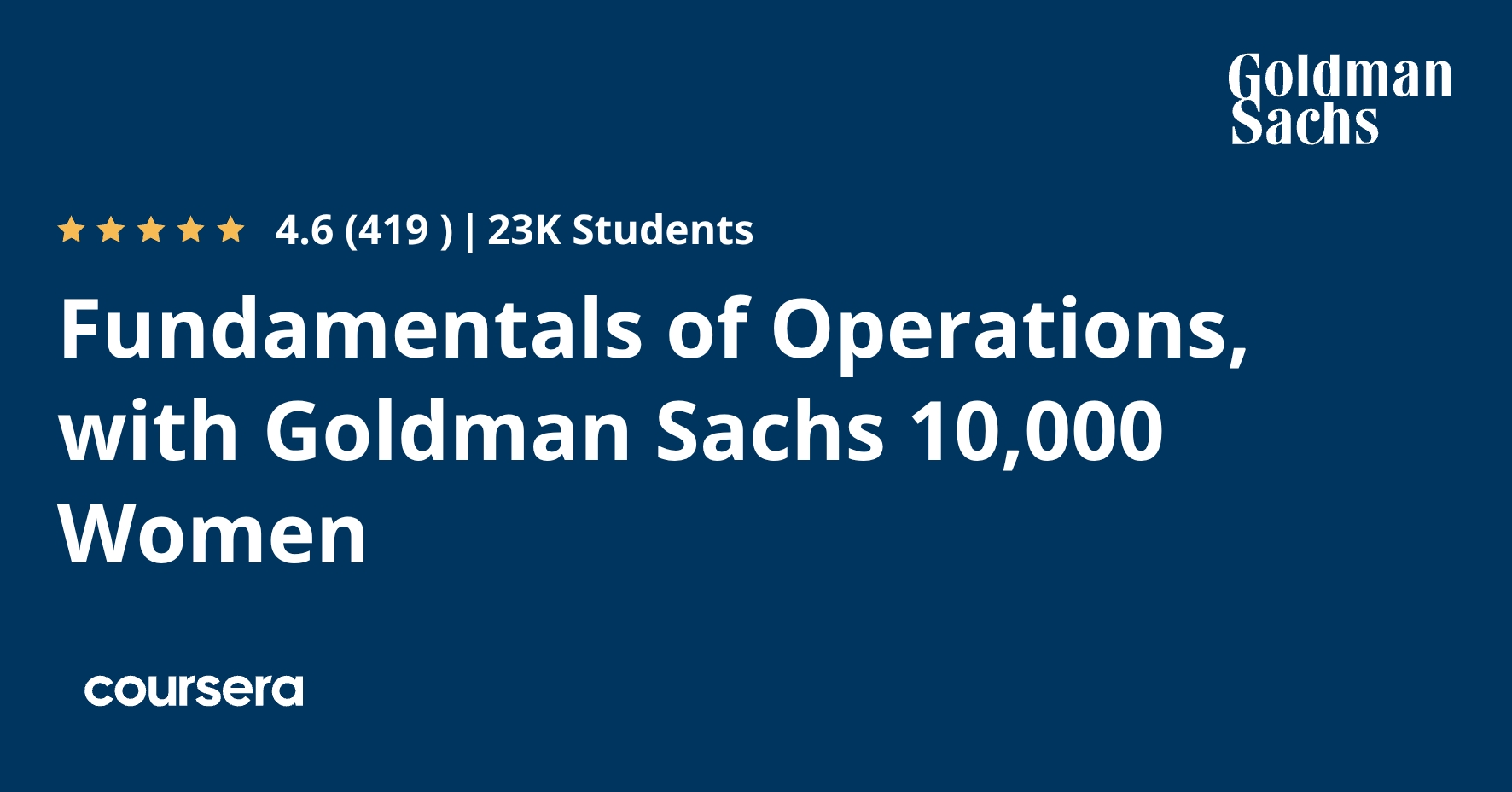
This article explains what you will actually learn in Coursera’s "Fundamentals of Operations" from the Goldman Sachs 10,000 Women collection, who will benefit most, who should skip it, and how to get started for free (with no certificate). We’ll also show what the course covers, its real strengths and weaknesses, and what to do next if you want to go further.
Is This Course Right for You? The Bottom Line

Best for: Entrepreneurs and managers who want to understand and improve their business operations, especially those ready to map out and refine key processes for growth.
Not for: Learners looking for an official certificate, academic credit, or a deep dive into advanced operations management theory.
Bottom line: If you want practical tools to analyse and improve your business processes—and do not need a certificate—this free course offers focused, actionable content in just four hours.
What You’ll Actually Learn: Content and Activities
The course is structured as a single, focused module (about four hours), with a mix of short videos, readings, assignments, and discussion prompts. Here’s what you’ll find inside:
- 5 short videos (19 minutes total): Covering principles of process improvement, assessing your business processes, refining for competitive advantage, and choosing the right measures for assessment.
- 17 readings (approx. 2 hours): Topics include identifying key operational processes, understanding process mapping, finding waste, optimising processes, and ongoing review.
- 2 assignments: Practical exercises to map and evaluate your own business processes, and to check your understanding.
- 3 discussion prompts: Reflect on your process evaluation, discuss tools to support your processes, and consider how to gather high-quality data.
- 2 plugins: Activities like joining the 10,000 Women mailing list and a guided process mapping exercise.
Key learning outcomes:
- Identify operational challenges as your business grows.
- Use technology to support business growth.
- Map out and evaluate your key business processes.
- Assess strengths and weaknesses, and choose improvement measures.
Mapping, Improving, and Measuring Business Processes: What Matters
Business operations are the backbone of any company, but as a business grows, the processes that once worked can become inefficient or outdated. Process mapping is a practical tool that helps you visualise every step involved in delivering your product or service. By laying out each stage—from receiving raw materials to delivering to customers—you can spot bottlenecks, unnecessary steps, or areas where mistakes often happen.
For example, imagine a bakery owner in Nakuru who wants to expand her delivery service. By mapping out her order-to-delivery process, she notices that delays often occur when confirming orders by phone. With this insight, she could introduce an online order system, reducing errors and speeding up fulfilment. The course teaches you how to create these maps, identify waste, and set targets for improvement—skills that help any business owner keep operations efficient as they grow.
Strengths and Weaknesses: What Stands Out
Strengths:
- Practical focus: All activities are designed to apply directly to your own business, not just theory.
- Free access: Every feature is available at no cost, including videos, readings, and assignments.
- Short and focused: You can complete the course in one afternoon, making it ideal for busy entrepreneurs.
- Flexible learning: Suggested deadlines you can reset—study at your own pace and revisit materials as needed.
- Multiple languages: Versions available in English and 23 other languages (see the course collection for details).
Weaknesses:
- No certificate: You do not receive any certificate or official document after finishing.
- Limited depth: The course is an introduction; it does not cover advanced operations management or industry-specific tools.
- Single module: There’s no step-by-step progression—everything is packed into one module, which may feel rushed for some learners.
When This Course Isn’t Enough—and Where to Go Next
This course is not the right fit if you need a formal certificate for your CV, academic credit, or in-depth training in advanced operations management. It is also not designed for those seeking highly technical or sector-specific operations tools.
Next steps:
- If you want to go deeper, consider taking more courses from the Goldman Sachs 10,000 Women collection, which covers sales, marketing, finance, and business growth planning. All are free, and you can complete them in any order.
- Eligible participants who complete all ten core courses are invited to join the Goldman Sachs 10,000 Women global alumni community.
- For those who need a certificate, you will need to look for other paid courses on Coursera or other platforms—this course does not offer any certification.
How to Access and Study: Key Practical Details
- Cost: 100% free to study; no payment or credit card required for any feature.
- Certificate: No certificate or credential is issued for this course.
- Access: Enrol online and get immediate access to all materials.
- Mobile and offline: You can use the Coursera app (Android/iOS) to watch videos and download them for offline study.
- Deadlines: All deadlines are suggested only; you can reset them if you need more time.
- Data usage: Watching all videos online uses about 100–190 MB of data (estimation). Downloading via Wi-Fi is recommended to save mobile data.
Go to the official course page
Wrapping Up: Who Gets the Most Value and What Comes Next
This course is best for entrepreneurs and managers who want to map, analyse, and improve their business operations without spending money or chasing certificates. After finishing, you can continue with other free 10,000 Women courses to build a full business growth plan tailored to your needs.
FAQ
Can I get a certificate after finishing this course?
No, this course does not provide any certificate or official document.
Is there any cost or hidden fee for accessing the full course?
No, all features are completely free, with no payment or credit card required.
Can I download the videos to study offline?
Yes, the Coursera app allows you to download videos for offline viewing.
Do I need to take the 10,000 Women courses in a specific order?
No, you can take any course in any order, or just the ones most relevant to your business.
OFFICIAL SOURCES
- Coursera, Fundamentals of Operations, with Goldman Sachs 10,000 Women: https://www.coursera.org/learn/10k-women-7
- Coursera, Goldman Sachs 10,000 Women course collection: https://www.coursera.org/collections/goldman-sachs-10000-women
This website is an independent guide. We are not affiliated with, or endorsed by, Coursera, nor by any certification body mentioned in this article. Course content, prices, entry requirements and application dates are set by the provider and can change at any time. Always confirm the current details on the official course page before enrolling.